The Bennington Triangle: Five People Vanished Around One Vermont Mountain
In five years, five people went into the woods around one southern Vermont mountain and did not come back. Four were never found. The one who was found left no explanation.
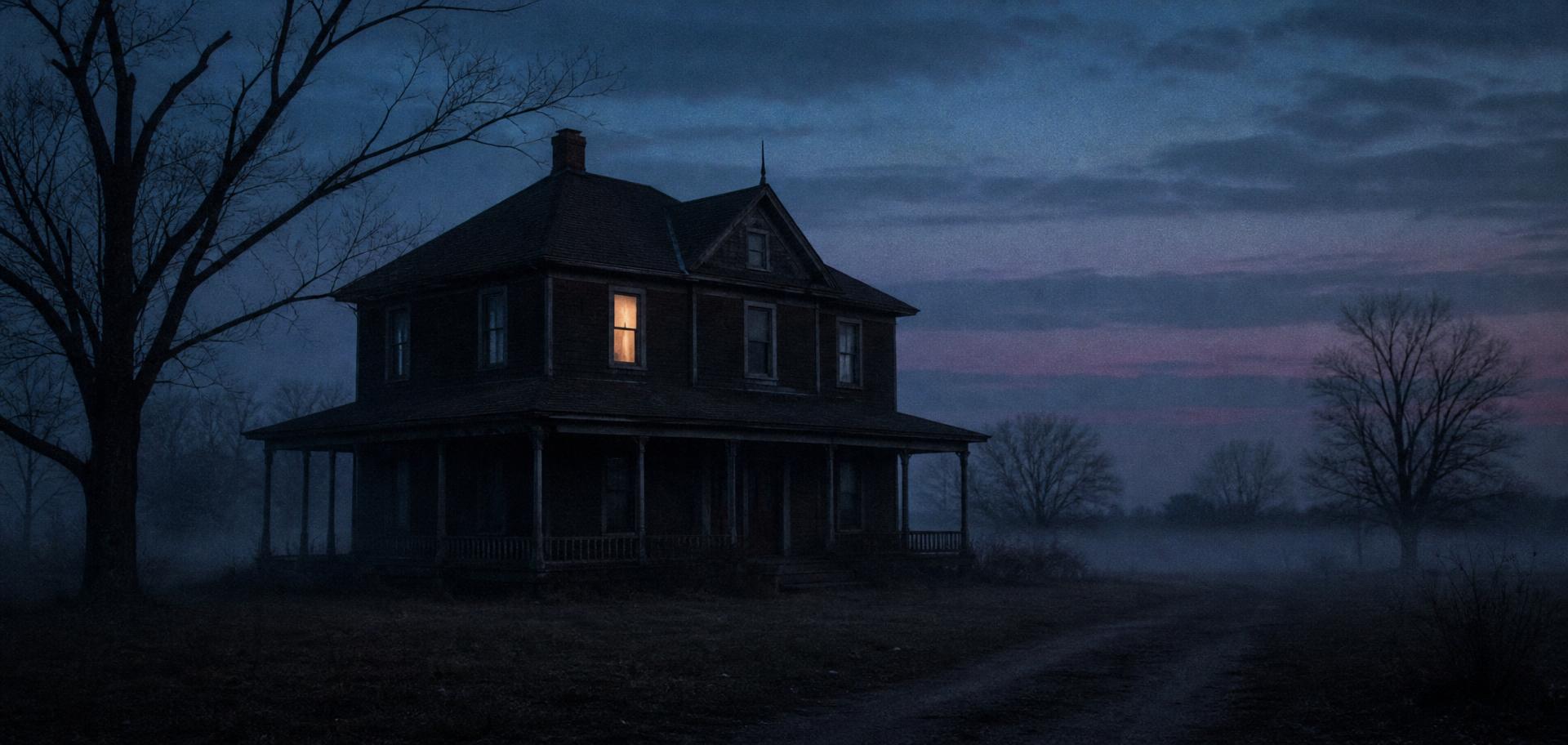
Illustrative reconstruction; not an archival photograph.
Glastenbury, Vermont, is a town on the map with almost no one left in it. It was never large — a logging and charcoal settlement under the mountain that shares its name — and by the middle of the twentieth century the mills were gone, the railroad had stopped, and the town's official population had fallen to single digits. What remained was wilderness: the Green Mountain National Forest, the Long Trail crossing the ridge, and miles of steep, wet, trackless forest. Between 1945 and 1950, five people walked into that country and vanished. The cluster is real. The label — 'the Bennington Triangle' — came decades later, from Vermont author and folklorist Joseph Citro, and it is worth remembering that the name describes a coincidence of geography, not a proven connection.
Middie Rivers, November 1945
The first of the five was no tourist. Middie Rivers, seventy-four, was an experienced hunting and fishing guide who knew the local woods as well as anyone alive. On November 12, 1945, he was leading a party of four hunters back toward camp near Bovensville, along the Route 9 corridor west of Bennington. Rivers walked ahead of the group on a familiar trail — and simply never arrived. When the hunters reached camp he was not there. Searchers found no body, no clothing, no weapon, nothing but, reportedly, a single rifle cartridge by a stream. Rivers was dressed for the woods and equipped for them. He was never seen again.
Paula Welden, December 1946
Thirteen months later came the case that made the region famous. Paula Jean Welden, eighteen, was a sophomore at Bennington College. On the afternoon of December 1, 1946, she finished a shift at the college dining hall, changed into a red parka, jeans and sneakers, and told her roommate she was going for a hike on the Long Trail. Several people saw her: a watchman at the college, and a group of hikers on the trail near Glastenbury Mountain, who passed her and noticed nothing amiss. Then the sightings stopped. She was wearing clothing suited to a mild afternoon, not a Vermont winter night, and she carried no supplies.
The search for Paula Welden was enormous for its time — more than a thousand people at its height, with aircraft and volunteers from several states, and the Welden family offering a reward. Because Vermont in 1946 had no state police force, the investigation was hampered from the start; the case became one of the arguments that led to the creation of the Vermont State Police the following year. No trace of her was ever found. The theories — a fall or injury off the trail, foul play, a voluntary disappearance — have all been argued for decades, and none has ever been supported by a single piece of physical evidence.
James Tedford, December 1949
The strangest entry in the file is also the one most distorted in retelling. James E. Tedford, a sixty-eight-year-old veteran living at the Bennington Soldiers' Home, had been in St. Albans visiting relatives and was riding a bus back to Bennington on December 1, 1949 — three years to the day after Paula Welden vanished. Multiple passengers later said he was in his seat, asleep, as the bus approached Bennington. When it arrived, he was gone. His luggage was still in the rack, his coat still on the seat, an open bus timetable on his lap. What the record does not support is the version often repeated online, in which a full bus watched him vanish. Passengers noticed his absence, not his exit. No one saw him leave the bus, and he was never found.
Paul Jepson, October 1950
On October 12, 1950, eight-year-old Paul Jepson was with his mother at the family's property — a pig farm on a mountain road near Glastenbury — while she tended the animals. She left him playing in the truck for what she said was under an hour. When she came back, he was gone. Bloodhounds brought to the scene reportedly followed his scent partway along the road toward a crossroads near the Long Trail area before losing it. Hundreds of searchers combed the woods. The boy, who had been wearing a bright red jacket, was never found. His father later said Paul had talked in the days before about wanting to go 'to the mountains' — a detail that has been repeated ever since, though it proves nothing except that an eight-year-old liked the idea of the mountains.
Frieda Langer, October–November 1950
Sixteen days after Paul Jepson disappeared, Frieda Langer, fifty-three, of Somerset, Massachusetts, became the fifth. On October 28, 1950, she was hiking with her cousin along the Somerset Reservoir trail when she slipped into a stream and soaked her clothes. She told her cousin to wait while she walked the short distance back to their camp to change. She never reached it. Searchers scoured the area for weeks and found nothing. Then, on May 12, 1951 — seven months later — her body was found in an open clearing near the reservoir, in ground that had been searched repeatedly. The body was too decomposed for a cause of death to be determined. Frieda Langer is the only one of the five who was ever recovered, and her recovery answered nothing.
What the record supports — and what it doesn't
It is here that the file needs its disclaimer. The Bennington Triangle has accumulated decades of decoration: the area is said to be a place the Abenaki avoided, cursed ground, a window into somewhere else. Joseph Citro, who coined the name, has always presented it as folklore and mystery, not as proof of anything. The documented facts are more ordinary and in some ways worse: five people of very different ages and levels of experience went missing in rugged terrain, in an era before modern search-and-rescue, before GPS, before helicopters with thermal imaging. New England woods swallow evidence quickly; a body off-trail can go unfound for years, as Frieda Langer's case shows even when searchers return to the same ground.
Against the ordinary explanations stand the details that keep the file open. Middie Rivers was a guide who knew those woods. Tedford vanished from a moving vehicle, which terrain cannot explain. Two of the searches were among the largest Vermont had ever mounted, and four of the five left no trace at all — no clothing, no weapon, no personal item. The Long Trail still crosses Glastenbury Mountain, and hikers still walk it. What happened to the other four between 1945 and 1950 remains, seventy-five years on, exactly what it was then: unknown.
Sources & record
- 01Vermont State Police historical case records and contemporary Bennington Banner reporting on the Welden, Jepson and Langer searches, 1946–1951.
- 02Joseph Citro's writings on Vermont folklore, including his naming of the 'Bennington Triangle', 1992 onward.
- 03Contemporary press coverage of the Middie Rivers and James Tedford disappearances, 1945 and 1949.
- 04Records relating to the founding of the Vermont State Police, 1947.
Online citations