The Golden State Killer, and the Family Tree That Caught Him
For forty years, investigators pursued crime series under different names without knowing who was responsible. The answer came from preserved evidence, distant relatives in a genealogy database and a direct DNA match.
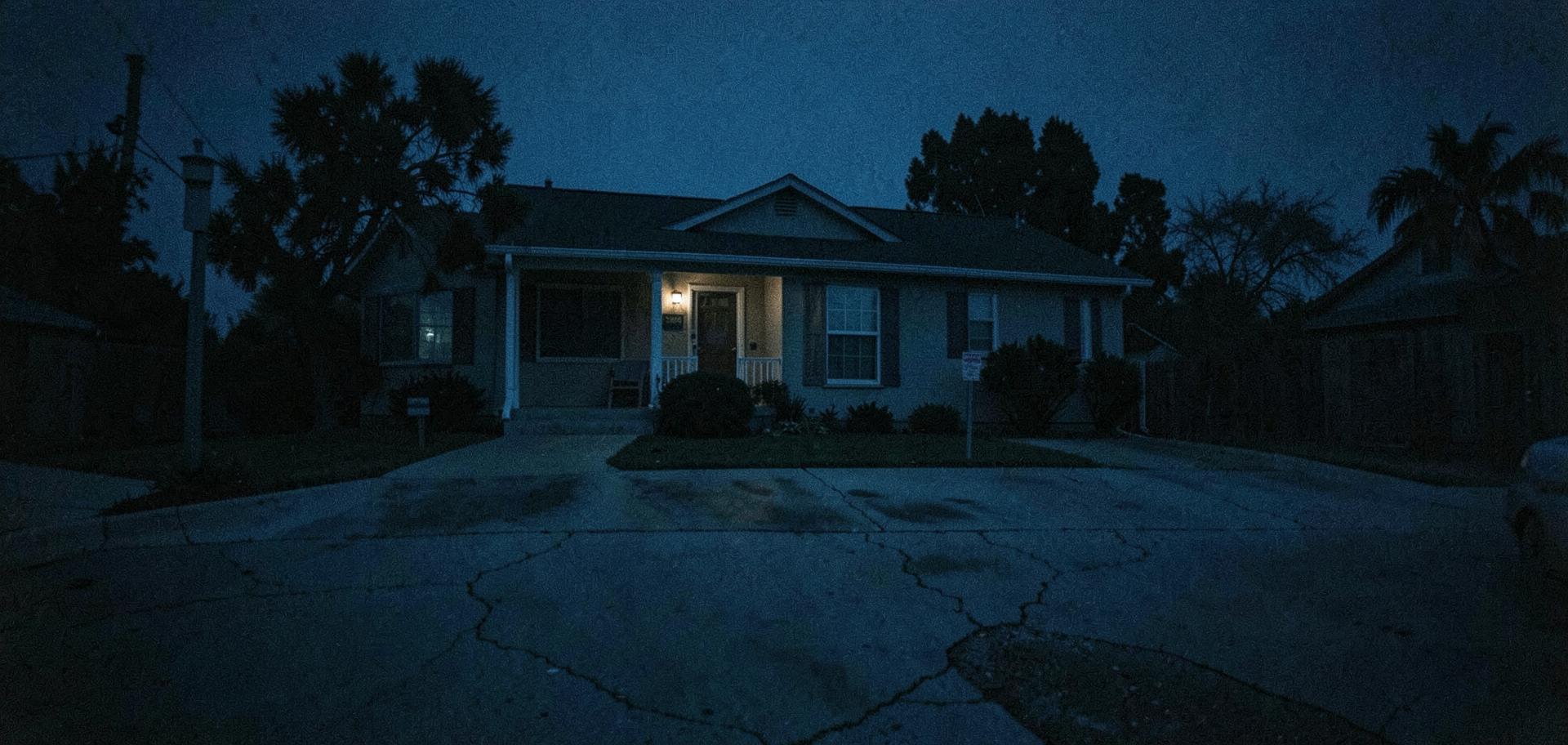
Illustrative reconstruction; not an archival photograph.
For decades, California police files described several apparently separate offenders. The Visalia Ransacker entered homes in the Central Valley in 1974 and 1975. The East Area Rapist attacked across the Sacramento region and other Northern California communities from 1976. Farther south, a killer later called the Original Night Stalker murdered couples between 1979 and 1986. Different jurisdictions gave the patterns different names, stored different evidence and pursued different suspect lists. The man ultimately held responsible was Joseph James DeAngelo Jr.
A pattern begins in Visalia
Beginning in 1974, residents of Visalia reported a concentrated series of break-ins. The intruder often entered when no one was home, moved or scattered possessions, stole small personal items and ignored more valuable property. Investigators attributed more than one hundred burglaries to the Visalia Ransacker. On 11 September 1975, Claude Snelling was shot and killed after confronting a masked man who was trying to take his teenage daughter from the family home. Prosecutors later included Snelling's murder among DeAngelo's admitted crimes.
The Visalia series stopped in December 1975. Six months later, on 18 June 1976, the first attack attributed to the East Area Rapist occurred in Rancho Cordova, east of Sacramento. The offender watched neighbourhoods, learned household routines and entered homes before an attack to prepare escape routes. He initially targeted women who were alone or with children; later he attacked couples. His repeated use of bindings, threats and objects balanced as alarms became part of the behavioural pattern witnesses and investigators remembered.
The East Area Rapist moves south
The attacks spread beyond eastern Sacramento County to communities including Stockton, Modesto, Davis, Concord, San Ramon and San Jose. Police departments exchanged information, but California had no single statewide investigation able to assemble every burglary, assault and homicide in real time. Surviving victims supplied descriptions and remembered phrases, yet masks, darkness and the offender's efforts to disguise his voice made identification difficult. Public meetings drew frightened crowds. Patrols increased. The attacks continued.
On 2 February 1978, Brian and Katie Maggiore were shot while walking their dog in Rancho Cordova. Investigators later linked their deaths to the same offender, although the evidence was circumstantial rather than a surviving crime-scene DNA profile. By late 1979, attacks with a closely related method had appeared in Southern California. There the offender killed Robert Offerman and Debra Manning in Goleta, followed by Lyman and Charlene Smith in Ventura, Keith and Patrice Harrington in Dana Point, Manuela Witthuhn in Irvine, Cheri Domingo and Gregory Sanchez in Goleta, and Janelle Cruz in Irvine. Cruz, killed in May 1986, was the final known victim in the series.
The figures attached to the case changed as investigators connected records. The FBI's 2016 public appeal attributed 12 homicides, 45 rapes and more than 120 burglaries to the offender. The prosecution's 2020 factual basis described 13 known murders and nearly 50 rapes between 1975 and 1986, including the Snelling case. The difference reflects how the Visalia crimes were incorporated into the final case and how time-barred assaults were counted; it is safer to preserve the official figures with their dates than to treat every published total as interchangeable.
DNA proves two case files were one
The offender stopped, but biological evidence survived. In 2001, DNA testing linked the East Area Rapist assaults in Northern California to murders attributed to the Original Night Stalker in Southern California. Investigators now knew that one person had crossed the old case boundaries. His profile was entered into law-enforcement databases, but there was no direct match to a known offender. DNA had unified the crimes without naming the man.
Public attention also kept the investigation alive. Writer Michelle McNamara studied the case, interviewed investigators and survivors, and used the name Golden State Killer for the linked offender. She died in 2016 before completing her book. I'll Be Gone in the Dark was finished with the help of Paul Haynes and Billy Jensen and published in February 2018, two months before the arrest. McNamara did not identify DeAngelo, but her work helped bring a sprawling regional case and its survivors back before a national audience.
That same year marked a renewed official push. On the fortieth anniversary of the first known East Area Rapist assault, the FBI and California agencies announced a national publicity campaign and a $50,000 reward. Detectives revisited evidence that had already outlasted multiple generations of forensic technology. The decisive step would use a kind of database built for relatives rather than offenders.
The tree instead of the man
In 2017, investigators began exploring investigative genetic genealogy. A laboratory converted crime-scene DNA into the type of profile used for genealogical comparison and uploaded it to GEDmatch, a third-party site where people could share data produced by consumer DNA-testing companies. The search did not reveal the offender's name. It returned people who shared portions of DNA with the unknown suspect — distant genetic relatives who could be placed into family trees.
Genealogists and investigators traced those shared branches through public records, obituaries, birth records and family connections. They then narrowed possible descendants by sex, age, geography and details from the crime series. The work eventually pointed toward DeAngelo, then 72 and living in Citrus Heights. The result was an investigative lead, not proof: police still needed to compare his DNA directly with the profile preserved from the crimes.
A suspect hidden inside the search
DeAngelo had worked as a police officer during crucial years of the crime series: first in Exeter, near Visalia, and later in Auburn, northeast of Sacramento. Auburn dismissed him in 1979 after he was arrested for shoplifting a hammer and dog repellent. None of this alone established guilt. It mattered because his age, movements and employment overlapped the developing chronology, while the genealogical work placed him in the relevant family line.
Officers placed DeAngelo under surveillance and recovered items he had discarded. Laboratory testing matched his DNA to the crime-scene profile. The discarded sample supplied the direct forensic confirmation that the family-tree work could not. Police arrested him at his Citrus Heights home on 24 April 2018; officials announced the arrest the following day. Agencies across several counties then assembled charges from crimes committed over more than a decade.
The plea that put every county in one room
California law prevented prosecution of many sexual assaults because the statutes of limitation in force when they occurred had expired. Murder had no such limit. On 29 June 2020, under an agreement that removed the death penalty, DeAngelo pleaded guilty to 13 counts of first-degree murder and 13 kidnapping-related counts. He also admitted numerous rapes and other crimes that could not be charged. The hearing was held in a ballroom at California State University, Sacramento, with space for survivors and relatives as well as pandemic distancing.
Before sentencing, survivors and victims' relatives addressed the court across three days. Their statements returned names, families and decades of consequence to a case often reduced to an offender's nicknames. On 21 August 2020, Judge Michael Bowman imposed life without the possibility of parole: 11 consecutive life terms, additional concurrent life terms and further time for weapons enhancements. The agreement ensured that DeAngelo would die in prison while allowing admissions to crimes that could no longer reach a jury.
The privacy question left open
The identification demonstrated the reach of investigative genetic genealogy. A person does not need to submit DNA personally to become traceable; enough participating relatives can expose a branch of a family tree. That made the technique valuable in cold cases and unidentified-remains investigations, while raising difficult questions about consent, database terms and the limits of police access. GEDmatch changed its law-enforcement settings after the case, and the United States Department of Justice issued an interim policy in 2019 requiring forensic genealogy to be used as an investigative lead and followed by confirmatory testing.
The Golden State Killer investigation was not solved by genealogy alone. It depended on survivors who reported attacks, evidence retained for decades, laboratories that connected old scenes, detectives who crossed jurisdictional boundaries, genealogists who converted distant matches into a list of people, and a final direct DNA comparison. The family tree produced a name. The abandoned DNA established that the name belonged in court.
The legal file is closed, but the historical record remains larger than the conviction. It contains communities altered by fear, people who waited four decades to speak in the same room as the man who attacked them, and relatives who learned that an ordinary entry in a genealogy database could reach someone they had never met. DeAngelo's arrest answered who committed the crimes. It also changed how investigators — and families — understand what shared DNA can reveal.
Sources & record
- 01Sacramento County District Attorney's Office, People v. Joseph James DeAngelo Jr., factual basis and plea record, 2020.
- 02Federal Bureau of Investigation, East Area Rapist / Golden State Killer national campaign and case summary, 2016.
- 03Orange County District Attorney, Joseph DeAngelo charging announcement and case materials, 2018.
- 04United States Department of Justice, Interim Policy: Forensic Genetic Genealogical DNA Analysis and Searching, 2019.
- 05Michelle McNamara, I'll Be Gone in the Dark (HarperCollins, 2018).
- 06Contemporary reporting by the Los Angeles Times, Reuters and KCRA on the identification, plea and sentence, 2018–2020.
Online citations
- →FBI — national campaign and official East Area Rapist case summary (2016)
- →Sacramento County prosecutors — 2020 factual basis for the guilty plea (PDF)
- →Orange County District Attorney — charges involving the Harrington, Witthuhn and Cruz murders
- →CBS News — GEDmatch, distant relatives and the identification of DeAngelo
- →Los Angeles Times — genetic genealogy and the confirming DNA match
- →Tulare County District Attorney — joint plea announcement, 29 June 2020 (PDF)
- →Tulare County District Attorney — official sentencing record, 21 August 2020
- →US Department of Justice — interim forensic genetic genealogy policy (2019 PDF)